
Playbook / For creators
How to become a content creator in college (without going viral)
A practical playbook for students: the gear you already own, the three videos to make first, how to set a rate, where to get listed, and how to keep it up during midterms.
September 25, 2026 · 8 min read
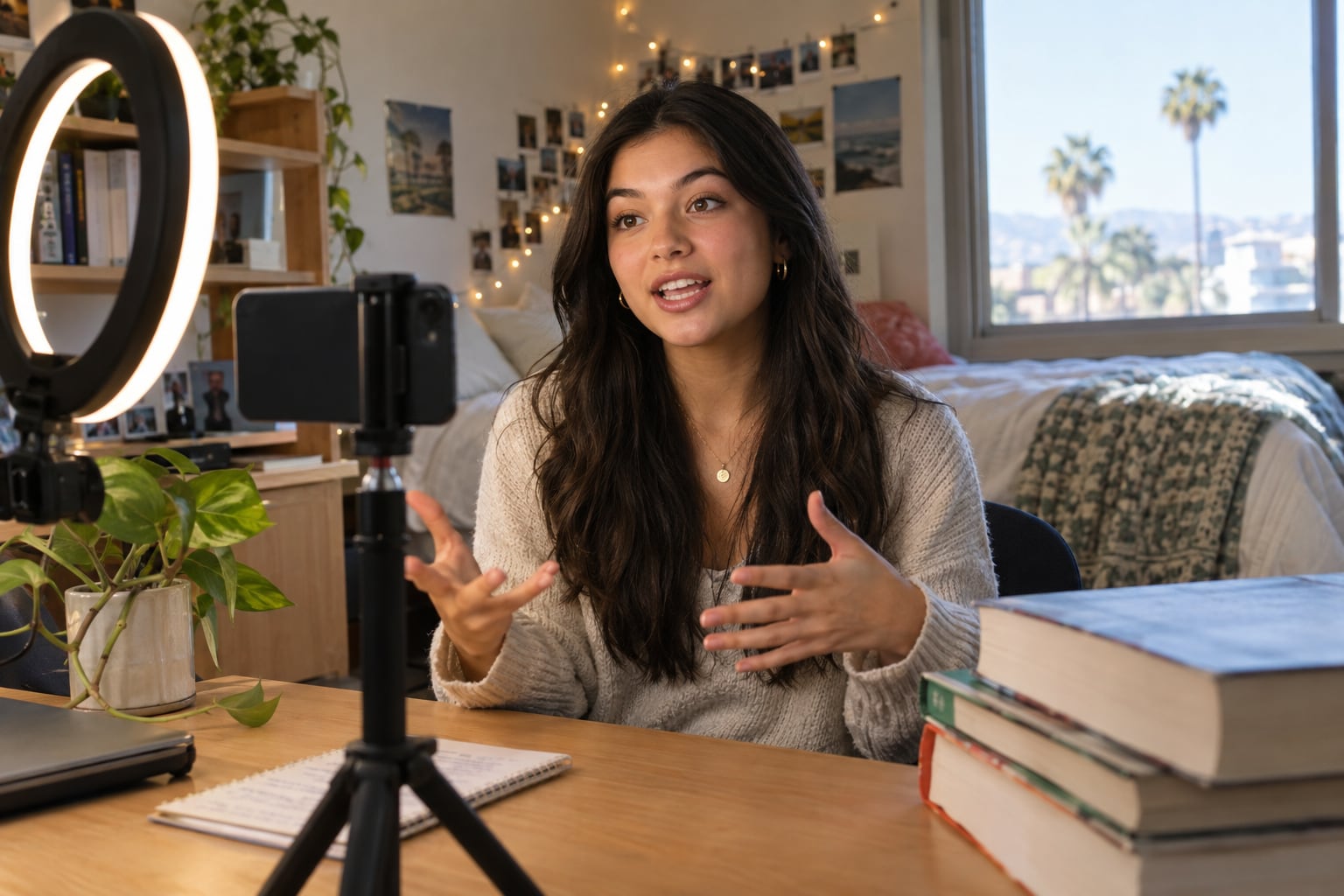
The mistake most students make is trying to build an audience first. Audience takes years; paid work takes a portfolio. Here's the order that actually works.
1. Make three videos this week
Brands will judge you on three clips, so make three good ones on purpose. Pick products you already own and film one of each:
- Talking head, 30 seconds: "Three things I wish I knew before buying my dorm fridge." Hook in the first second, face to camera, captions on.
- Unboxing or first impressions: anything that arrived in a box this month. Show the packaging early, react honestly.
- Day-in-the-life: 8 a.m. class → coffee → library → gym, with one product woven in naturally.
Post them, sure — but the point is the portfolio, not the views. Save the files.
2. Use the gear you have
Your phone is the camera. Add a $20 tripod, a $25 clip-on ring light, and a lav mic if your dorm has a loud AC. Window light beats every light you can buy. Here's the full dorm setup.
3. Decide what you're for
Pick two niches you can talk about for an hour: fitness and food, skincare and fashion, tech and study, gaming and dorm life. Then pick two formats you enjoy making. "I make fitness and food content, mostly talking-head and day-in-the-life" is a sentence a brand can book.
4. Set a rate before anyone asks
New student creators: $100–$150 per finished 30–60 second video. With three strong examples and quick turnaround: $200–$300. Add 50% if the brand wants to run ads from your handle. Don't undercut to $30 — it signals you'll flake. Full breakdown in college UGC rates.
5. Get listed where brands search by campus
Cold-DMing brands works about 2% of the time. Being findable works while you sleep. Apply to Creators Creating with your .edu, your handles and those three clips; you're listed on your school's page and brands looking for your campus see you first.
6. Take briefs like a professional
- Read the whole brief before you film. The angle they asked for is the one they'll approve.
- Deliver early. Turnaround is the #1 thing brands mention when they rebook.
- Treat a re-film request as normal. It's not a rejection; it's a note.
- Invoice cleanly or, better, use a platform that pays you automatically.
7. Protect your grades and your eligibility
Two to four briefs a month is sustainable in a full course load; eight is not. If you're a student-athlete, check your school's NIL guidelines before any paid post. If you're on a visa, confirm whether creator income is permitted for your status.
What it looks like at month three
A profile with real approvals, a rate you don't apologize for, two brands that rebook you every month, and a portfolio you can walk into any marketing internship with. The audience can come later — or not. The work is the point.